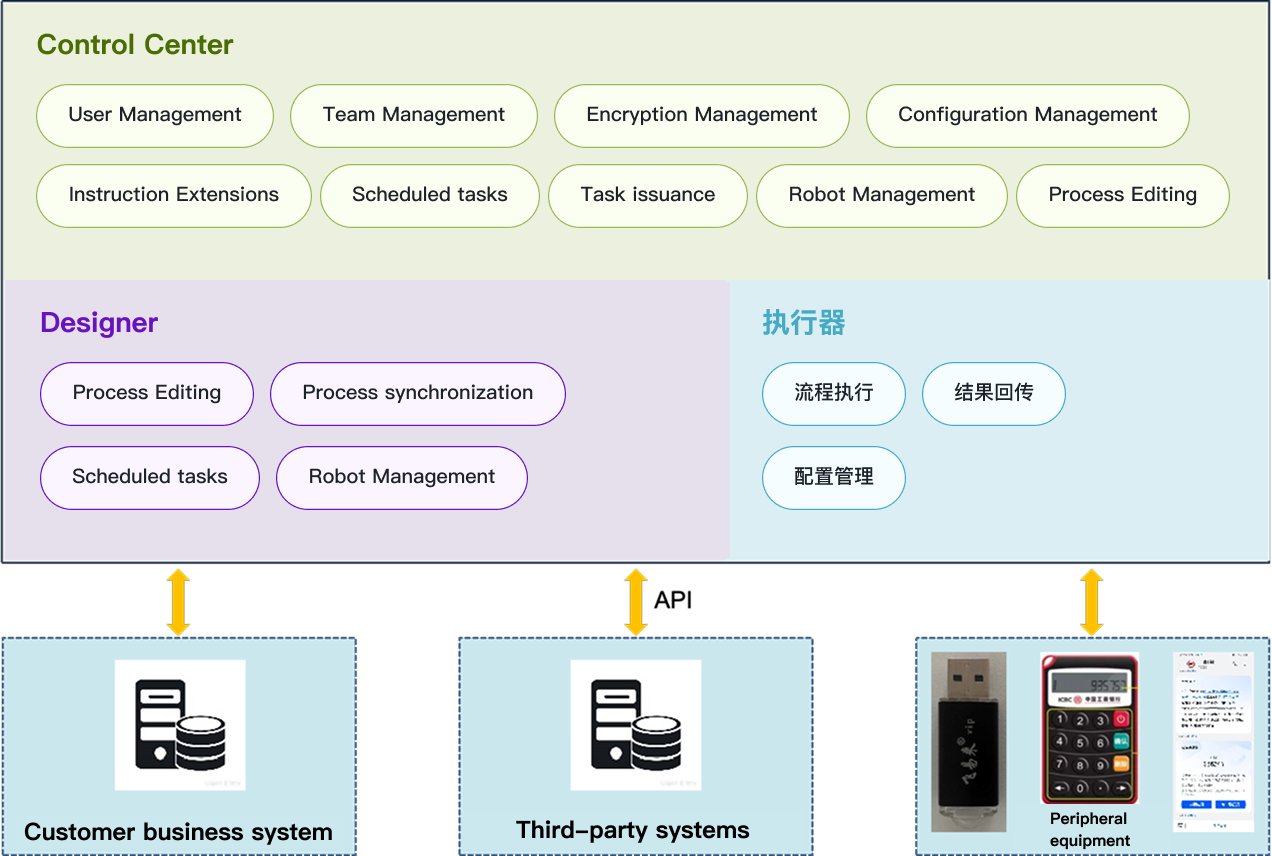
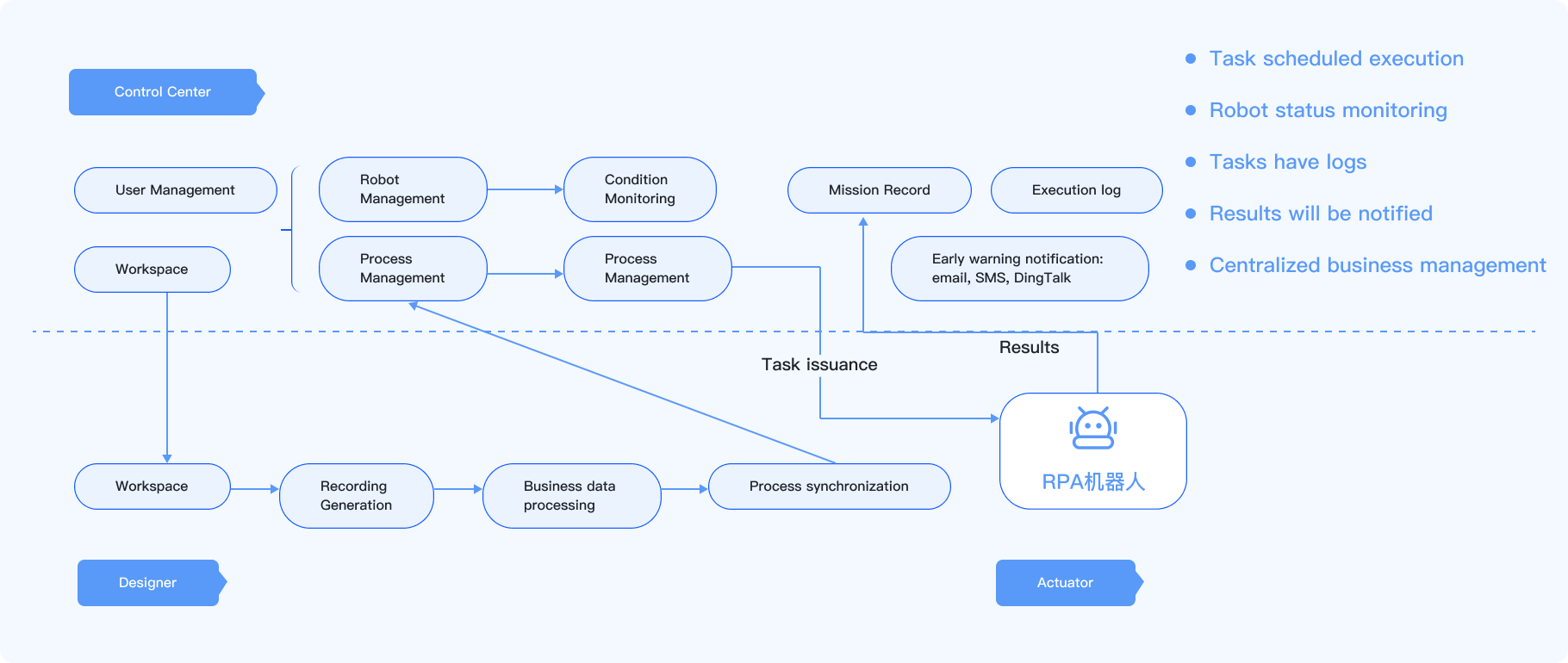
By automating repetitive tasks, the RPA solution significantly improves efficiency and accuracy, reducing labor costs and operational risks. With its non-invasive, low-code platform and flexible scalability, Zezhong RPA has become a key tool for enterprises to achieve intelligent operations and maintenance transformation. It is suitable for core scenarios such as account management, inspection and monitoring, and data migration, helping IT departments upgrade from "firefighting operations and maintenance" to "proactive service."
RPA (Robotic Process Automation) uses software robots to simulate human operations (clicking, typing, copying, etc.) in various software interfaces according to pre-programmed rules, automating repetitive, time-consuming, and error-prone business processes and tasks.
Improve business execution efficiency
Reduce manual errors
Reduce reliance on manual labor
Automate business processes
Improve organizational performance and competitiveness
Business scenarios characterized by extensive repetition and clear rules.
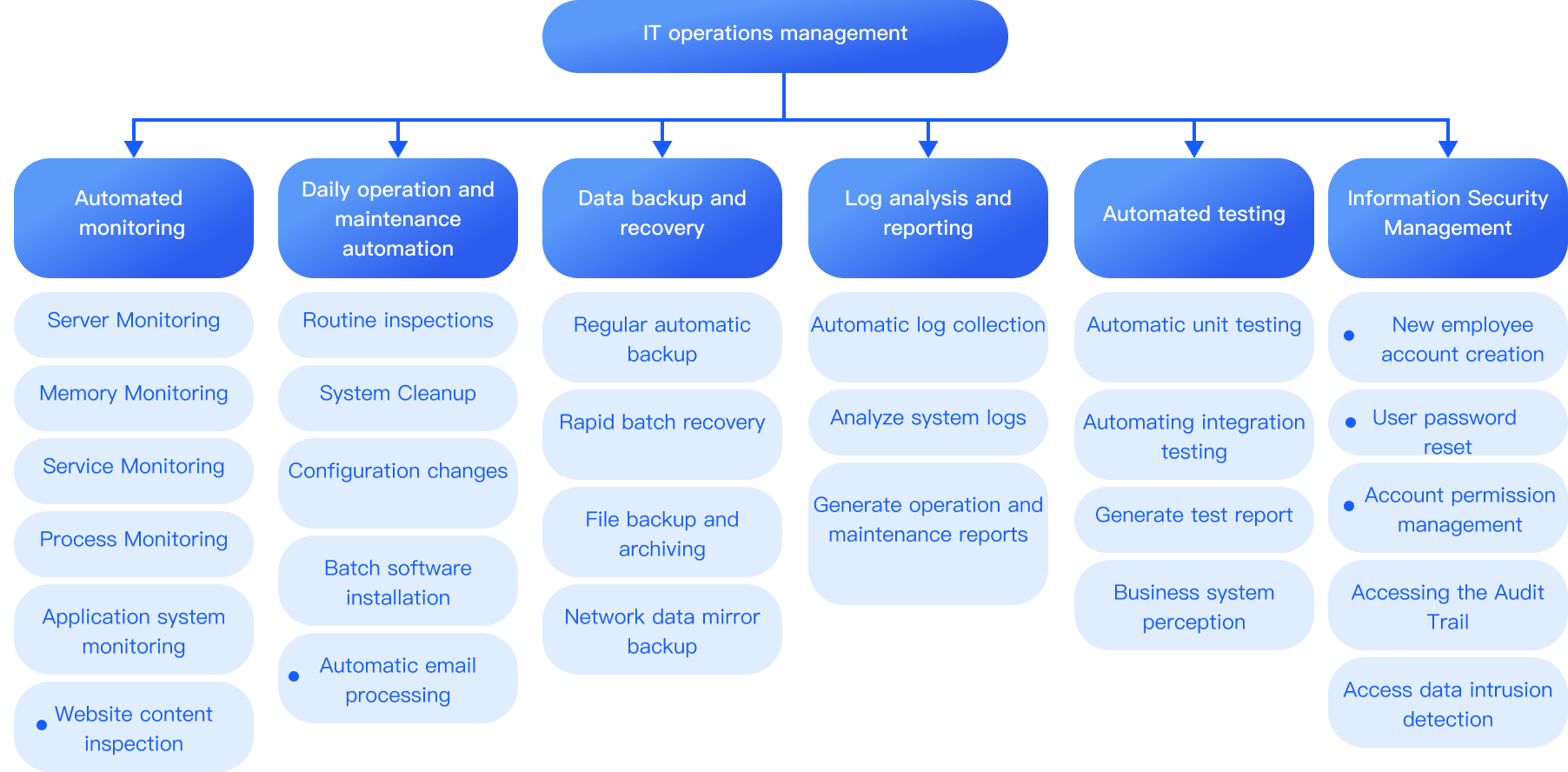
RPA - large amounts of repetitive rules are clear
Some companies frequently need to clean and update email addresses in their systems. Processing large amounts of email data often requires IT staff intervention. RPA robots, however, can automatically access each account, update data, and ensure that important information is not leaked. With RPA, even employees without programming skills can easily update information without repetitive manual steps.
If an enterprise deploys multiple systems, it may be necessary to import data from one system into another. RPA, with its flexible scalability and non-invasive nature, can be easily integrated into any system, making cross-system data migration a breeze.
When time is tight and workloads are high, RPA can be a crucial aid. RPA robots can perform repetitive tasks on behalf of employees, operating efficiently 24/7, ensuring that assigned tasks are completed within a timely manner and with guaranteed quality and quantity.
RPA robots can be used to monitor critical business systems, enhancing enterprise information management. RPA simulates customer interactions with applications to ensure smooth system operation. If any issues are detected, RPA will promptly report them to the relevant personnel via email, SMS, and other means, and record operation logs to ensure the normal and secure operation of business systems.
Scripts are written to automatically execute tasks based on predetermined logic and schedules. This approach is primarily suitable for configuration monitoring and management of application servers, devices, middleware, applications, and services, as well as automated data backup. However, due to its limited functionality and simple logic, it lacks the ability to integrate into the processes and logic within business systems. Furthermore, due to personnel changes, maintainability is often compromised.
By capturing page elements and interface controls, it simulates real-world human operations according to defined processes. It can achieve business automation in complex scenarios involving multiple systems, platforms, and data structures through a non-invasive plug-in approach. Furthermore, it can seamlessly integrate AI and other enhancements to achieve even more advanced automation, further enhancing the intelligence of IT operations and maintenance.
The primary purpose of IT operations and maintenance is to ensure business continuity and stability for core businesses and supporting systems.
Many repetitive issues occur during daily operations, resulting in a lack of an effective knowledge base or inadequate implementation of the knowledge base.
Log formats for equipment, systems, businesses, and databases are inconsistent, leading to insufficient proactive monitoring methods.
The inability to effectively monitor the processes and logic within business applications impacts reliability.
Due to suboptimal O&M standardization, effective service-oriented tools cannot be developed.
The O&M Management Platform lacks scalability, resulting in high secondary development costs.
Data exchange between systems uses multiple formats and inconsistent standards, resulting in high workload, frequent errors, and time delays.
The inspection workload for key business application processes and data logic is large and complex, leading to human errors and low efficiency.
Due to factors such as the capabilities, experience, execution, and subjectivity of operations and maintenance personnel, actual operations and maintenance results are unsatisfactory.
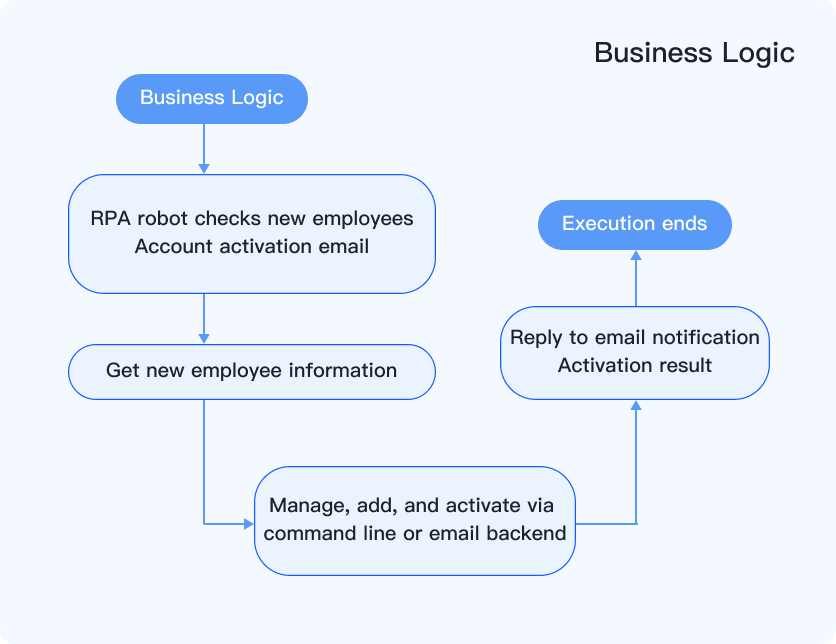
After new employees join the company, the IT department needs to assist in creating various accounts, such as Active Directory accounts and email accounts. Due to the heavy workload of IT, this task can sometimes be delayed due to other tasks, impacting the new employee's experience. Manually creating a new account takes the IT department 15 minutes each time.
RPA can check emails sent to new employees requesting account activation. Based on the new employee's information, RPA automatically executes command lines or email backend management to add and activate the new user. Finally, it responds to emails notifying the relevant personnel of the completion result. The RPA operation completes in just three minutes.
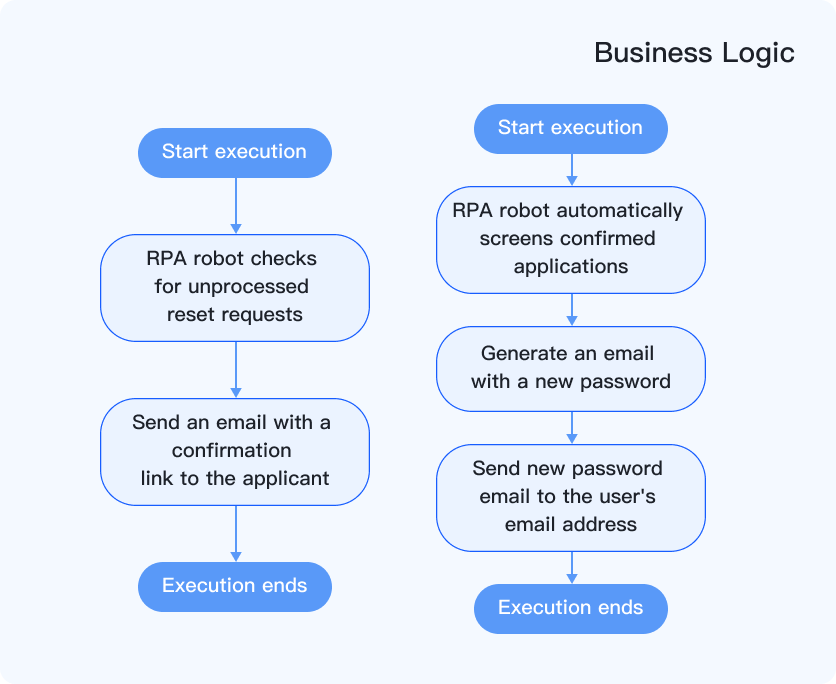
Users need to submit a password reset request to the IT system administrator, wait for the administrator to send a confirmation email, and then follow the instructions to log in to the linked email address and click a link to confirm the operation. This entire process is manually completed by employees, which is time-consuming, inefficient, and unable to respond to user needs in a timely manner.
After receiving a password reset request from a user, the RPA robot automatically sends a confirmation email to the user's registered email address. After the user manually logs in and clicks a link to confirm that they are resetting their password, the RPA robot automatically logs in to the software information management backend, searches for the user's information, clicks the reset button, and then sends an email with the new password to the user, automatically logging the request. The RPA process completes in just three minutes.
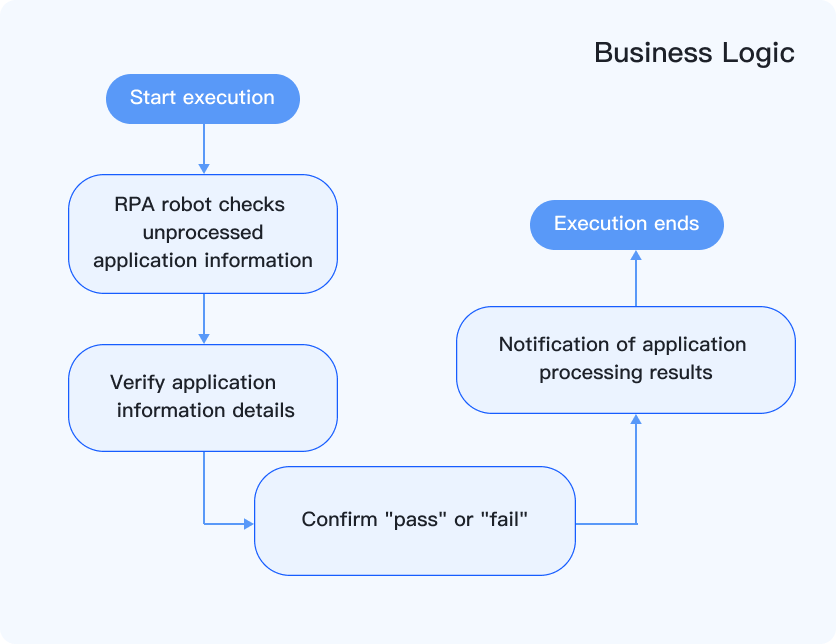
Daily, due to position/personnel changes and business needs, account management (application/change/removal) requests are numerous and fragmented. Handling each request individually would reduce IT staff's productivity, while centralized processing would result in delays in processing some requests and hinder timely responses to user needs.
RPA robots immediately process account applications across various systems and platforms, log into the data management system to check for duplicates, and then execute subsequent steps based on the application type (addition, update, or removal). Once the operation is complete, the data is synchronized and the applicant is notified. The RPA process takes just three minutes.
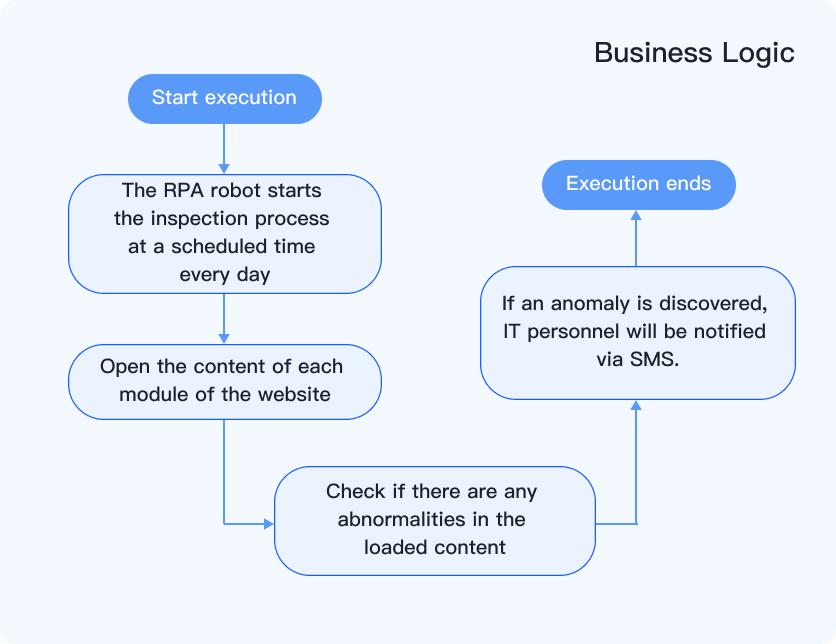
IT operations staff must manually inspect the portal website daily, checking for anomalies in each module and webpage. Manual inspections are often impacted by other factors, making it difficult to detect and respond to issues promptly.
Using RPA to automatically monitor website content, we enable comprehensive troubleshooting and centralized management of issues and problems. Effective conditional settings provide accurate fault warnings. This helps enterprises mitigate potential IT environment risks, prevent them before they occur, reduce operational expenses, and enhance risk resilience.
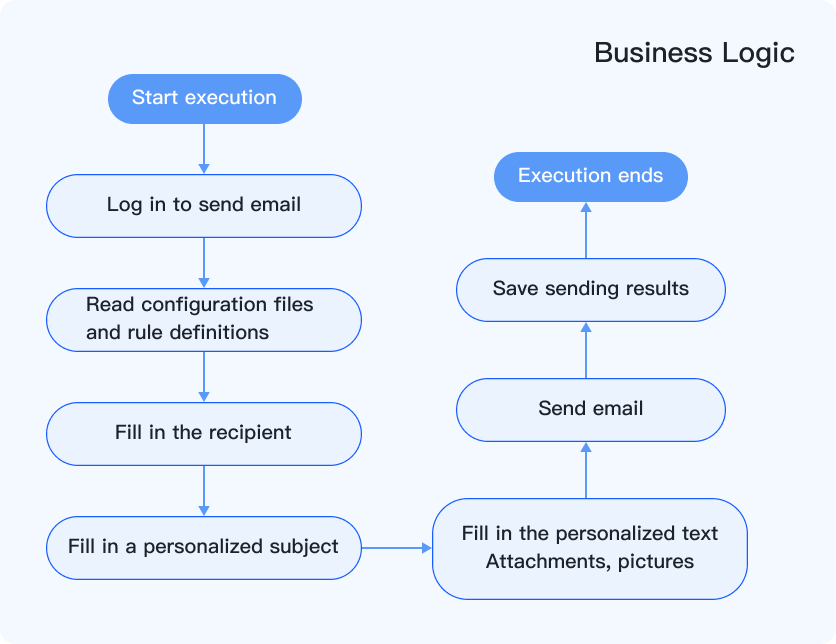
In daily work, you sometimes need to send large numbers of emails in batches. 1. Send them using different email addresses; 2. Email recipients need to be grouped; 3. Email content needs to be personalized (language, content, etc.); 4. Send them at different times.
Manually doing this is labor-intensive and error-prone.
Based on the configuration file and rule definitions, the RPA robot automatically completes the email writing and sending process, including adding recipients, entering the subject, filling in the body, adding attachments, and inserting images. The results are then saved in an Excel spreadsheet.
Wizard-based installation
No complex configuration required
Supports LAN deployment
Supports standalone deployment/p>
LAN deployment, independent access
Unified business process management
Centralized storage of operational data
Encrypted storage of sensitive data
Natural language view
Multiple configuration options
Multiple recording methods
OCR visual recognition
Unattended, automated execution. Supports scheduled, immediate, and scheduled execution.
Supports single and simultaneous execution by multiple robots.
Supports remote monitoring of robot execution progress.
24/7 automated execution
Real-time monitoring of execution status
Execution efficiency is 5 times higher than manual processing
Solve at least 40% of repetitive tasks for users
Supports custom commands
Supports multiple value types
Supports multiple system types
Supports third-party system integration
Robotic Process Automation (RPA) uses user interface technology to execute repeatable, rule-based tasks (typically performed by humans). Its advantages are as follows:
Robots can operate 24/7; they require no rest and can work non-stop, even during nights and weekends.
Robots can significantly reduce labor costs.
Processes can be processed five times faster than humans.
Robots operate according to pre-defined rules, operating with precision and achieving 100% accuracy.
Traceable product evolution, customizable products, and maintainability provided by an in-house development team.
RPA automates tasks according to pre-set program operating instructions, enabling business processes to be automated by robots.

With the use of RPA, 80% of the original financial work was done on daily transaction processing, and only 10% of the time was spent on decision-making.

RPA makes securities business processes more scientific and smooth, not only improving work efficiency and reducing costs, but also bringing the best experience to customers.
Eliminate repetitive work
and replace it with automation.
Your information has been successfully submitted!
Our customer service staff will contact you shortly.